
The quiet moment that costs people money
You picked the peaceful route. You got your Final Order. Then… life calls, work piles up, and small “I’ll do it later” items start eating your wallet and your sanity. The truth: your first two weeks after the decree determine whether everything clicks into place or slowly unravels. Here’s the practical, judge-approved way to make your order work.
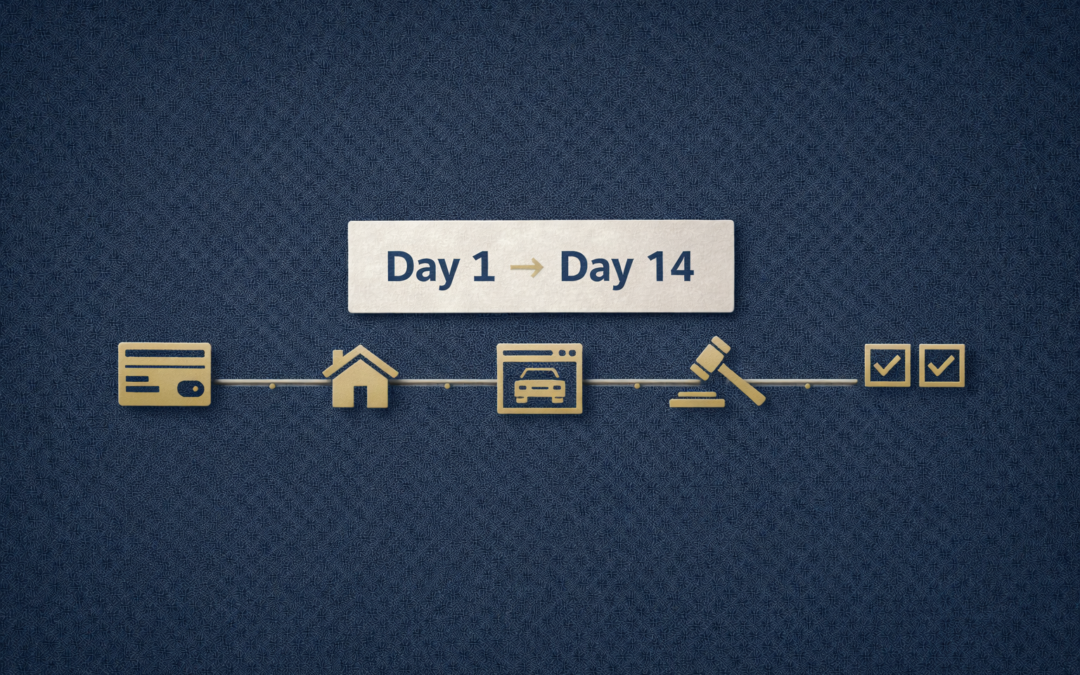
Days 1–3: Lock the foundation
Grab the paperwork. Save PDFs of your Final Order, Settlement Agreement, Parenting Plan, and (if applicable) the Georgia Child Support Worksheet in a single folder.
Open your proof channel. Choose one place to share documents—secure portal or shared email thread.
Bank snapshot. Download the latest statements for joint accounts and credit cards. This creates your “before” picture and prevents mystery autopays.
Days 4–5: Untangle the money
Direct deposit + autopays. Move your paycheck to a solo account. Update autopays to the correct owner, especially utilities, insurance, storage units, cloud services, and subscriptions.
Close or hard-limit joints. Reduce balances to the agreed split, then close or restrict the account. Remove each other as authorized users on every card so future charges don’t bleed through.
Days 6–7: Make the house plan real
Refinance or sale steps—now.
- If you’re keeping the home, start the lender application and calendar your apply-by and close-by dates required by the order.
- If there’s a sale fallback, contact the pre-named agent, set the listing date, and schedule photos.
Insurance and access. Keep homeowners or renters coverage active; confirm who’s an additional insured during the transition. Ensure appraisal/showing access rules match the order.
Days 8–9: Move the vehicles
Title + loan + insurance. Transfer titles at the tag office, start a loan assumption or payoff per the order, and update insurance to the correct owner with proper limits. Confirm who handles tags and ad valorem. Upload proof to your shared folder.
Day 10: Support that runs itself
Turn on the payment method in your order—income deduction or the state portal. Pick a predictable due date, then stop using ad-hoc transfers. For uncovered medical, follow the 30/30 rhythm: submit receipts within 30 days; reimburse within 30 days of receipt.
Day 11: Retirement and QDROs
If a 401(k) or pension is being divided, name the QDRO drafter, confirm the valuation date, and contact the plan administrator for forms. Put their processing timeline on your calendar so months don’t slip by.
Day 12: Parenting plan in motion
Live the schedule exactly as written for the first month. Use the exchange times and locations, the late-arrival grace period, and the holiday rules. Predictability lowers stress for kids and prevents “drift” that creates arguments.
Day 13: Proof beats memory
Set a recurring reminder: upload monthly statements for any joint or transitional bills by the third day after they’re due. That tiny habit ends “I thought you paid it” texts and gives both sides quick visibility.
Day 14: Clean the digital trail
Update mailing addresses, 2FA, and recovery emails. Remove shared logins. If your order includes a social media clause, follow it—no subtweets, no screenshots, no kid info outside the rules.
Red flags to fix fast
- A mortgage in both names with no refinance progress.
- A vehicle with mismatched title, loan, and insurance.
- Support paid by cash/Venmo with no paper trail.
- Parenting time “as needed” rather than the plan you signed.
- No movement on QDRO drafting for retirement.
Each of these gets harder (and more expensive) the longer you wait.
Georgia practicality: how to keep the fast track
Judges in Richmond, Columbia, and Burke counties approve orders that are precise and enforceable. If your packet was drafted correctly, many uncontested matters can be presented for approval about 30 days after signatures when the court is satisfied. After entry, it’s on you to execute: titles, loans, portal payments, and statement uploads. Execution is what makes “final” feel final.
Professional bottom line
Your decree is the green light, not the finish line. Handle the first 14 days with intention—move the money, move the titles, launch support, and live the schedule—and your divorce stays what you wanted from the start: calm, quick, and truly complete.
Closing message
Need help turning your Final Order into a smooth reality? Catherine Verdery Ryan, Attorney at Law, prepares county-ready agreements and post-order action plans that protect your credit, time, and peace.
Visit catherineryanlawyer.com to finish cleanly.